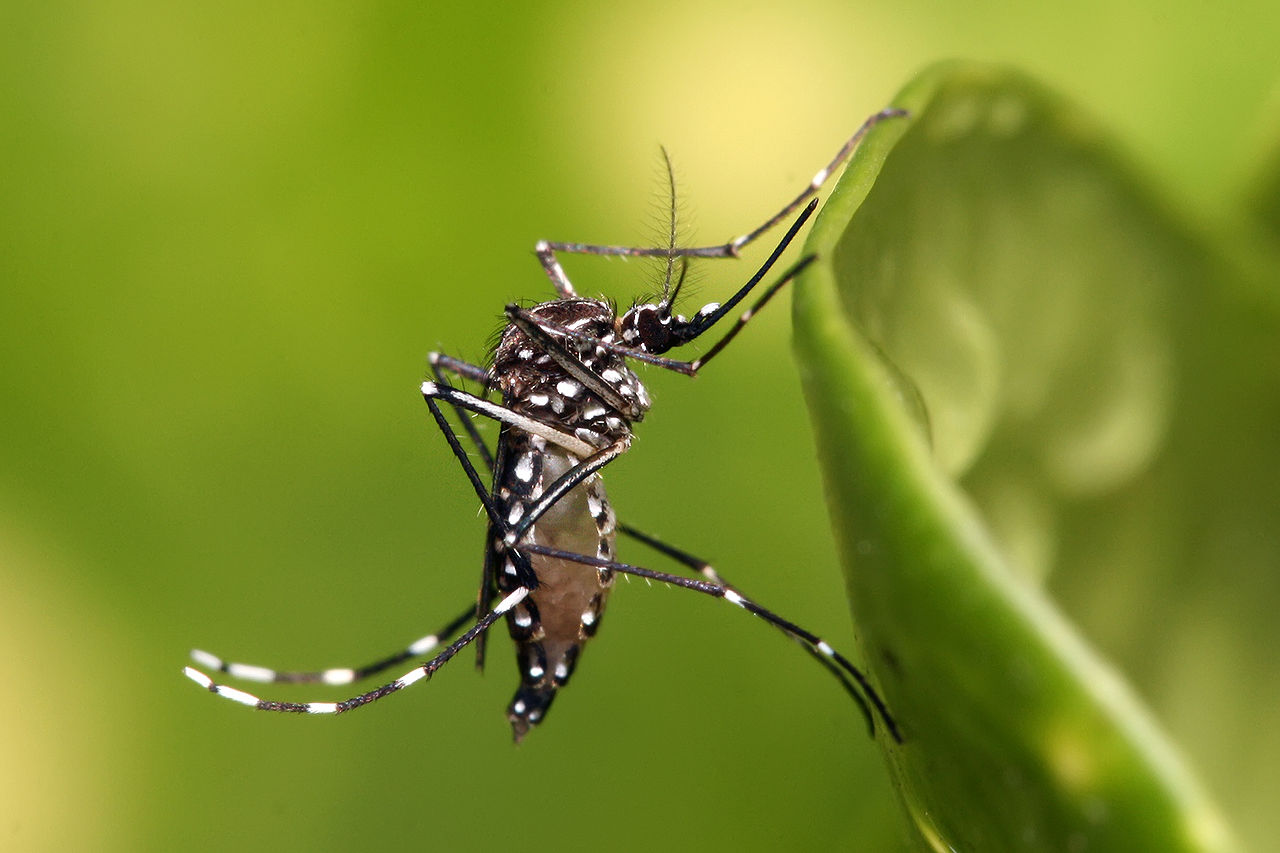
The mosquito Aedes aegypti has evolved into two subspecies: one of the two (A. aegypti aegypti) has become globally invasive and thrives in urban environments, therefore promoting susceptibility of zika virus within the subspecies.
Aedes aegypti, more commonly known as the yellow fever mosquito, is found in tropic and subtropic environments in Asia and the Americas. The subspecies of interest, Aedes aegypti aegypti (Aaa), thrives in urban environments in the presence of humans and artificial water containers. The other subspecies, Aedes aegypti formosus (Aaf), is found in urban and forest habitats in sub-Saharan Africa and feeds more on animals rather than humans.
The human-specialist Aaa became globally invasive during the slave-trading period in the 17th and 19th centuries, the range of the mosquitoes expanded which gave rise to the first global pandemics of yellow fever and dengue.
In the late 1970s, researchers noticed Aaa populations were more susceptible to yellow fever than their Aaf counterparts (Aitken et al. 1977). This conclusion, as well as similar conclusions made from dengue research, have led researchers to investigate the variation of susceptibility in A. aegypti subspecies to Zika virus.
Zika virus was first isolated in 1947 in Uganda (Dick et al. 1952). It is mainly transmitted with the help of arthropods such as mosquitoes, and can also be transmitted through sexual contact or from mother to child during pregnancy. More than half of those infected don’t have symptoms; however, some people show mild symptoms such as a fever, rash, headache and joint pain. The virus can also cause birth defects in the fetuses of women infected with Zika.
The largest and most recent outbreak of Zika virus occurred in Brazil. Mosquito were easily able to infect humans in the tropical climate and high population density of Brazil (Ai et al. 2016). The quick spread of the virus is still largely misunderstood; therefore, scientists look to the mosquito vectors for more answers.
To determine susceptibility of 14 different laboratory colonies of A. aegypti, researchers developed an absolute measure of susceptibility, OID50. OID50 is 50% of the oral infectious dose, meaning the amount of virus that is needed to infect half of the blood fed mosquitoes of each colony type. Seven different types of Zika virus strains were used to best mimic viral genetic diversity in a lab setting. A single infectious blood meal was fed to the mosquitoes and OID50 estimates were later obtained. Mosquito colonies came from worldwide populations (Africa, Americas, and Asia) and from African populations (Senegal, Ghana, Uganda, and Kenya).
Of the mosquito colonies that were included in the study, pure Aaf populations were found to be less susceptible to Zika virus than the globally invasive Aaa subspecies. The most susceptible colony of mosquitoes originated from Senegal.
The researchers wanted to understand the genetic basis for susceptibility, and therefore crossed a 100% susceptible colony with a resistant colony, to determine the inheritance pattern of resistant alleles. The offspring showed low levels of susceptibility, therefore suggesting that resistant alleles were partially dominant. Further genetic tests helped the researchers determine that susceptibility was governed by a gene that was located somewhere on Chromosome 2.
Lastly, the researchers evaluated the difference in infection when using a mouse model compared to infectious blood meals. When the mosquitoes were fed with a live host, there was a substantially lower number of mosquitoes than became infected or infectious.
Is the lower transmission potential of the Aaf strain the reason there has not been a large outbreak of Zika? The Aaa strains are highly susceptible to Zika virus and habitat urban environments with humans as a main food source, how has this interaction not led to a larger outbreak of Zika? Based on the low susceptibility rate of Aaf populations, have they helped hinder a Zika outbreak on the African continent? Does this difference in susceptibility apply to other viruses as well?
These are all questions the researchers were asking as well, and future comparisons of different A. aegypti genomes could hopefully lead to more answers.
The information gained from this research can be helpful in better understanding Zika virus transmission. Increased susceptibility was observed in populations of mosquitoes that target human populations as a food source, and as urbanization and globalization increase this knowledge will become instrumental in developing prevention methods. Potential efforts to cross Aaa and Aaf strains at a larger scale could be made to keep A. aegypti mosquitoes from transmitting Zika virus to human populations. The researchers speculate that increased susceptibility could be due to links between domestic and susceptibility genes as Aaa populations developed a domestic lifestyle.

